
Choosing the 2026 Best Eastpoint Croquet Set for Global Buyers requires more than comparing photographs and prices. A reliable buying decision begins with practical details. Buyers should examine mallet materials, hoop strength, ball size, wicket spacing, and carrying options. These features affect play on grass, compact lawns, and uneven outdoor surfaces. Real-world testing matters. A set may look polished online yet feel unbalanced during a family match.
The Eastpoint Croquet Set can appeal to households, recreational clubs, resorts, and gift buyers seeking an accessible outdoor game. However, the “best” choice depends on local needs. Families may value lightweight equipment and simple storage. Clubs may prefer stronger components and replaceable parts. Global purchasers should also review carton dimensions, shipping protection, product instructions, and regional safety expectations. Packaging is not a minor detail. A cracked mallet or missing wicket can delay an entire order.
Material quality deserves careful attention. Hardwood handles can provide a traditional feel, while engineered materials may reduce maintenance concerns. Neither option is perfect. Weather, storage habits, and playing frequency can change performance over time. Buyers should request clear specifications from reputable sellers and compare warranty terms before ordering. Independent reviews can help, but personal experience remains limited by climate and playing conditions. This guide examines practical performance, value, durability, and purchasing confidence, helping international customers judge whether a particular Eastpoint Croquet Set fits their venue, budget, and expectations.
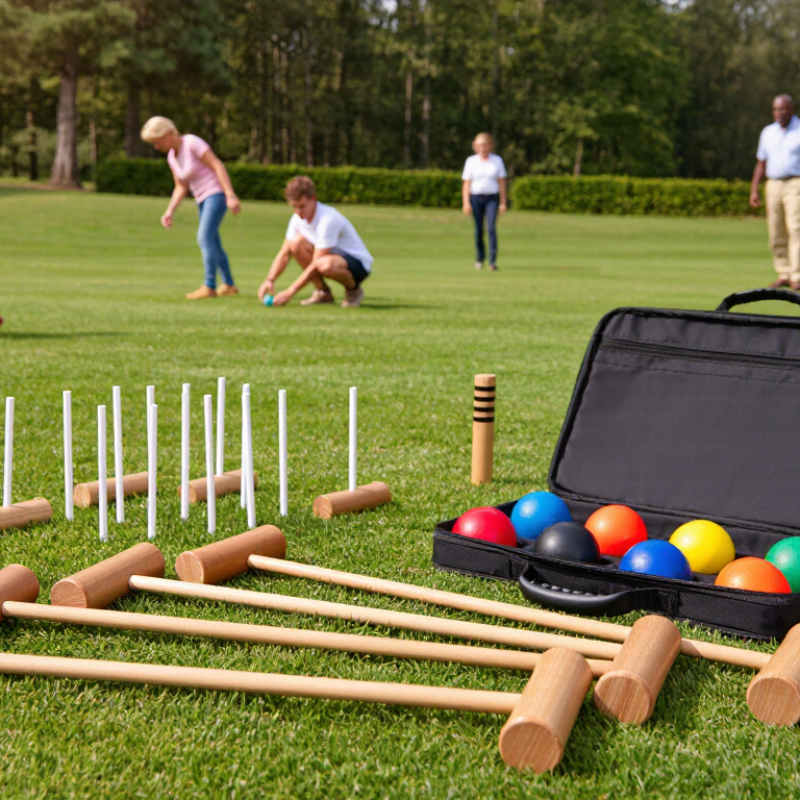
A quality croquet set should offer a clear, practical overview before purchase. Typical components include four mallets, colored balls, wickets, boundary pegs, and a center stake. Buyers should check whether the mallet lengths suit adults or children. A balanced handle improves control on grass, while durable heads reduce damage from repeated outdoor play. The set should also include a compact carrying bag.
Material choice affects everyday performance. Powder-coated metal wickets resist bending better than thin untreated wire. Solid wooden or reinforced composite mallets feel steadier during a swing. Bright ball colors make scoring easier across shaded lawns. Smooth surfaces are useful, but excessive polish may reduce grip in damp weather. That detail is easy to overlook.
Portability matters for global buyers. A lightweight case, labeled parts, and simple setup instructions reduce confusion during travel or storage. Buyers should confirm package dimensions, included accessories, and assembly requirements before ordering. Weather-resistant materials help, but no outdoor set is completely maintenance-free. Wipe wet parts after use and store them away from prolonged rain. In my experience, stability matters more than decorative design. Still, product descriptions may not explain how the set performs on uneven grass. Testing the wickets and mallets on the intended lawn remains a sensible step.
| Evaluation Dimension | Typical Product Information | Value for Global Buyers |
|---|---|---|
| Product Category | Recreational lawn croquet set for outdoor leisure, family activities, garden games, and casual club use. | Suitable for buyers seeking an easy-to-use set rather than tournament-certified equipment. |
| Common Set Configuration | A standard recreational configuration commonly includes 4 mallets, 4 colored balls, 6 wickets, 1 center peg, and boundary or court markers. | Supports four-player games and simplifies retail listing, gifting, and family-use positioning. |
| Game Capacity | Four balls generally correspond to four players in basic backyard croquet formats. | Clear player capacity helps buyers compare sets for households, hospitality venues, and event use. |
| Mallet Construction | Recreational mallets are commonly made with wooden heads and shafts, or with a composite or metal shaft paired with a durable head. Exact materials vary by model. | Material disclosure allows importers to assess durability, weight, finish quality, and packaging requirements. |
| Mallet Length | Many adult recreational mallets are approximately 32–36 in (81–91 cm) long; actual dimensions should be confirmed on the product specification sheet. | A useful reference for adult comfort, carton planning, and comparison with junior-sized equipment. |
| Ball Material | Outdoor croquet balls are typically manufactured from solid molded plastic or another impact-resistant polymer. | Solid construction is generally more suitable for repeated lawn play than lightweight hollow balls. |
| Ball Size Reference | Recreational ball diameters commonly range from about 3 to 3.5 in (76–89 mm). Competition specifications may differ. | Helps buyers distinguish backyard equipment from regulation-oriented sets. |
| Wicket Design | Common recreational wickets use coated steel or metal tubing with a U-shaped profile and ground-insertion legs. | Metal wickets provide practical resistance to repeated setup and removal on lawn surfaces. |
| Color Identification | Balls and mallets are usually coordinated by contrasting colors to identify players and simplify turn management. | Color coding improves usability for families, beginners, and multilingual markets. |
| Court Requirements | A level grass or synthetic lawn is recommended. A full Association Croquet court is 35 × 28 yd (32.0 × 25.6 m), while backyard layouts can be smaller. | Flexible court sizing makes recreational sets practical for gardens, parks, resorts, and event spaces. |
| Setup Time | A basic backyard layout can generally be assembled in approximately 10–20 minutes, depending on ground conditions and court size. | Short setup time supports portable use, seasonal activities, and rental or hospitality applications. |
| Portability | Many recreational sets are supplied with a carry bag or compact storage case; included accessories and case dimensions vary by model. | Portable packaging can reduce storage difficulty and improve suitability for travel, camping, and outdoor events. |
| Outdoor Durability | Metal parts should be protected from prolonged moisture, while wooden components should be kept dry and stored away from direct weather exposure. | Clear care guidance helps reduce corrosion, swelling, cracking, and premature wear in different climates. |
| Safety Considerations | Players should maintain safe spacing, avoid swinging mallets near others, and inspect stakes, wickets, and mallet heads before use. | Safety instructions are important for family sales, schools, resorts, and public recreation programs. |
| Recommended User Group | Adults, families, beginners, casual players, garden-party hosts, schools, and hospitality venues. | Broad user appeal supports multiple sales channels and seasonal promotional campaigns. |
| International Buyer Checklist | Confirm set contents, material composition, product dimensions, net and gross weight, carton size, care instructions, safety labeling, and destination-market compliance. | Accurate documentation reduces customs delays, listing errors, returns, and unexpected logistics costs. |
| Best Buying Position | A complete, portable, color-coded recreational set with durable outdoor components and clearly documented specifications. | Balances ease of use, family-friendly play, storage convenience, and practical international distribution needs. |
Outdoor recreation continues to attract broad participation. The 2024 Outdoor Participation Trends Report recorded 175.8 million American participants in 2023. That growth makes equipment quality more important for family lawns, clubs, and export buyers. Choose a set with solid mallets, balanced handles, and weather-resistant balls. A mallet should feel stable, not awkwardly heavy. Test the grip with one hand. Small details matter.
Check the wicket wire carefully. It should resist bending and keep a consistent opening across the set. Uneven wickets can frustrate beginners and distort competitive play. The World Croquet Federation’s equipment guidance supports consistent court layouts and regulated ball sizes. Use those measurements when comparing suppliers.
For casual play, a complete set should include corner flags, boundary markers, clips, and a practical carrying case. Missing parts create avoidable replacement costs.
Material selection needs honest judgment. Wood looks attractive, but repeated moisture exposure may cause swelling or cracking. Composite components often tolerate travel better, though they can feel less traditional. The Outdoor Industry Association report also shows strong demand for accessible outdoor activities, yet not every set suits every market. Consider climate, storage space, packaging strength, and local playing habits. A low price can be misleading. I would inspect stitching, fasteners, and ball roundness before trusting promotional photographs. Perfect packaging does not guarantee a dependable game.
A dependable croquet set begins with carefully chosen materials. Hardwood mallet heads offer a balanced feel and resist small impacts during regular play. Ash or maple can provide useful strength, though grain quality matters more than appearance alone. Shafts should feel straight, smooth, and comfortable in different hand sizes. Reinforced plastic or metal hoops can improve consistency on firm lawns. For damp climates, sealed wood helps limit swelling, but no finish removes maintenance needs.
Design affects both setup and control. Mallet handles with moderate diameter reduce wrist strain during repeated swings. Clear color markings help players identify equipment quickly in family games or club sessions. A stable carrying case protects pieces during international transport and outdoor storage. Look for strong stitching, separate compartments, and space for spare clips. Small details matter.
Performance depends on the playing surface. A heavier mallet may feel steady on short grass but tiring on uneven ground. Lightweight models can improve maneuverability, yet they may feel less forgiving after a poor swing. I would inspect the hoop spacing and ball diameter before purchase. Some sets look refined but provide limited impact resistance. That is a weakness worth acknowledging. Buyers should also check replacement options, care instructions, and local import requirements before ordering.
Comparative material-performance index for common croquet set components
Scores range from 0 to 100 and summarize typical durability, weather resistance, impact resilience, and playing feel. The figures are indicative material benchmarks rather than brand or company ratings.
Choosing a croquet set for international use requires more than comparing prices. Check the mallet length, ball diameter, wicket shape, and total piece count. Product photos can mislead, especially when scale is unclear. Ask for exact measurements and packed weight before ordering. Hardwood handles often feel steadier, while composite parts may resist damp storage better. Neither option is perfect.
Global buyers should review shipping terms, import charges, and return conditions carefully. A sturdy carton matters when parcels cross several warehouses. Look for clear assembly instructions and replacement-part availability. These details reduce delays after delivery.
I have found that bright colors improve lawn visibility, but color descriptions are not always reliable online. Requesting real product images can prevent disappointment. Also check whether the playing surface suits the set. Short grass and hard ground can change how balls roll.
Tips: Confirm the seller’s measurements, package contents, and delivery estimate in writing. Choose protective packaging for long-distance shipping. Store the set indoors after wet games. A small storage bag helps, though many included bags are thinner than expected. Test every mallet and wicket after unpacking. Record damage immediately, with clear photographs. For buyers ordering several sets, request a sample first; bulk savings are useful, but a small trial can reveal quality differences.
For global buyers, a quality croquet set must survive more than a garden game. It must endure long transit, changing humidity, and repeated handling. UNCTAD’s Review of Maritime Transport 2024 reports that over 80% of world merchandise trade by volume moves by sea. Choose reinforced cartons, separated mallets, and moisture-resistant wrapping. Ask for package dimensions, gross weight, and tracking details before payment.
Safety deserves practical attention. Inspect mallet heads, handles, hoops, and clips after delivery. Smooth splinters immediately. Avoid using damaged parts on hard surfaces or near crowded walkways. The World Health Organization’s 2022 physical activity report found that 31% of adults worldwide were insufficiently active. Outdoor games can encourage movement, but safe spacing still matters. A two-meter playing boundary is a sensible starting point, not a universal rule.
Care instructions often receive less attention than shipping. Store wooden components indoors, away from direct heat and persistent dampness. Wipe dirt with a slightly wet cloth, then dry every piece completely. Do not leave the set on wet grass overnight. The World Bank’s 2023 Logistics Performance Index gathered evidence from 4,090 logistics professionals across 139 economies, highlighting the value of reliable tracking and delivery visibility. Still, my own buying experience suggests that measurements can be overlooked. Confirm regional customs paperwork, replacement-part availability, weather suitability, and return costs in writing. These details may feel minor until one missing hoop stops the game.
Look for four mallets, colored balls, wickets, boundary markers, corner flags, clips, and a center stake. A carrying bag is useful.
Check whether the mallets fit adults, children, or both. A balanced handle should feel stable during a swing. Test the grip.
Powder-coated metal wickets resist bending better than thin untreated wire. Wooden or reinforced composite mallets can provide steady control.
Bright colors make scoring easier across shaded or uneven lawns. Round balls support fairer play. Check them carefully.
Confirm package dimensions, accessories, assembly needs, and carrying-case quality. Promotional photographs can hide weak stitching or loose fasteners.
Not necessarily. A light case helps travel, but overly light mallets may feel unstable. Stability matters more than decorative design.
Wipe wet parts after playing and store them away from prolonged rain. Outdoor equipment still needs maintenance. Nothing is completely weatherproof.
Uneven grass may affect wicket stability and ball movement. Test the equipment on the intended lawn when possible. I might underestimate this detail.
The Eastpoint Croquet Set is designed to provide a practical and enjoyable outdoor game experience for families, clubs, and recreational players worldwide. When choosing the best set in 2026, buyers should consider the number and quality of mallets, durable wickets, balanced balls, sturdy stakes, and convenient carrying or storage options. Materials such as weather-resistant wood, reinforced plastic, and corrosion-resistant metal can improve performance, appearance, and long-term value. A well-designed set should be easy to assemble, comfortable to use, and suitable for different lawn conditions and skill levels.
Global buyers should also review product dimensions, packaging, shipping costs, delivery time, and import requirements before purchasing. Secure packaging helps prevent damage during transportation, while clear safety guidance supports responsible use by children and adults. To maintain an Eastpoint Croquet Set, store it in a dry place, clean equipment after outdoor use, inspect parts regularly, and avoid prolonged exposure to moisture or extreme weather. These considerations can help buyers select a reliable set for enjoyable games across different regions.
