
Choosing a High Quality Croquet Set is more complicated than comparing prices and polished product photographs. Global buyers need reliable suppliers, consistent materials, and practical after-sales support. A good set should feel balanced in the hands. Its mallets should have secure heads, smooth grips, and durable finishes. The hoops should stand firmly on grass without bending after repeated use. Even the wooden box matters, especially during long-distance shipping.
Chris Clarke, former World Croquet Champion and an experienced equipment adviser, offers a useful principle: “Good equipment should reward accuracy, not disguise poor technique.” That idea guides this overview of the Top 10 High Quality Croquet Set Suppliers for Global Buyers. Their products are examined through manufacturing experience, material selection, product consistency, packaging, customization, warranties, and communication. These details often reveal more than a supplier’s marketing language.
No ranking is perfect. Supplier performance may vary between production batches. A set that suits a club may feel excessive for a family garden. Buyers should request current specifications, sample images, and clear information about replacement parts. Claims about premium timber or professional performance also deserve verification. Some suppliers communicate brilliantly but provide limited customization. Others offer strong craftsmanship but slower export support. This guide considers those trade-offs honestly, helping importers, retailers, clubs, and private buyers make more confident decisions. Small imperfections can remain. That is worth acknowledging.
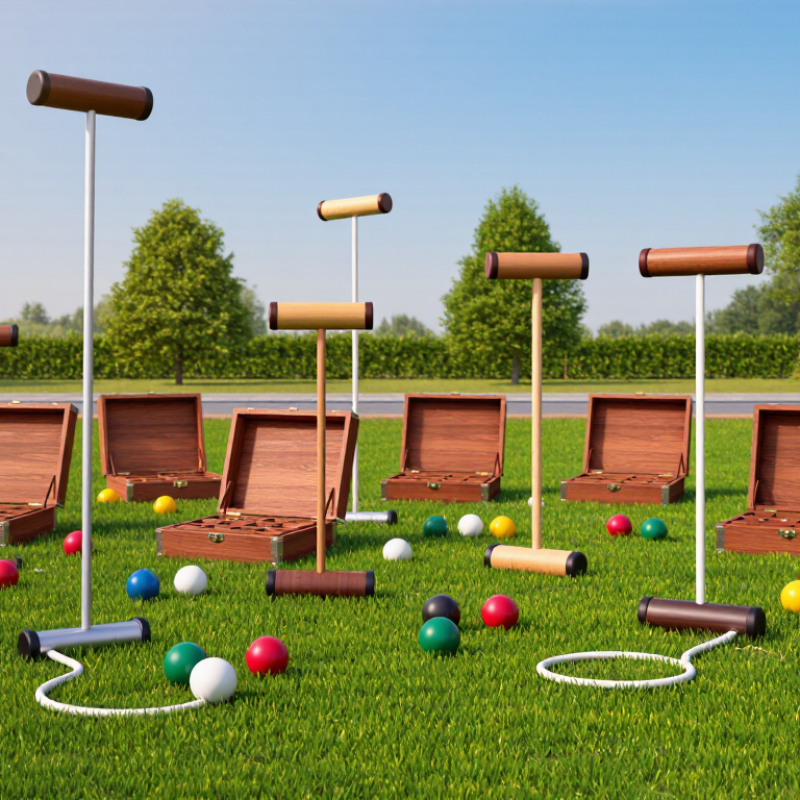
For global buyers, a croquet set should be judged as sports equipment, not only as attractive garden furniture.
The 2024 SFIA Topline Participation Report recorded 242.1 million Americans participating in at least one sport or fitness activity in 2023. That scale increases expectations for safe, durable, repeatable products.
Suppliers should provide material certificates, inspection records, and clear batch identification. Timber mallets need stable grain, sealed ends, and moisture control. Handles should remain straight after transport. Small details matter.
Hoops should resist bending during installation and keep consistent internal width.
Balls need balanced weight, smooth surfaces, and resistance to cracking under outdoor impact.
Buyers should request dimensional tolerances instead of accepting “premium quality” claims.
ISO 2859-1 can guide sampling plans, while EN 71 and ISO 8124 may become relevant when products are marketed for children.
These standards do not replace product-specific testing. They are starting points.
Packaging also deserves testing.
A 2023 World Bank logistics performance report emphasized the continuing importance of shipment reliability and damage control in international trade.
Use corner protection, moisture barriers, and carton drop tests.
I have seen well-finished mallets arrive with crushed heads.
That failure is easy to overlook.
Supplier audits should review coating adhesion, hardware corrosion, replacement-part availability, and corrective-action records.
No checklist catches every split handle, so buyers should combine laboratory evidence with pre-shipment inspection and a small trial order.
A strong supplier should prove consistency, not only show polished product photos. The ISO Survey 2023 recorded more than 1.26 million ISO 9001 certificates worldwide. Ask whether the factory holds a current certificate and whether its scope covers sporting goods production. Request recent audit reports, batch records, and corrective-action evidence. Samples should match mass-production materials, dimensions, finish, and packaging. Check mallet balance, hoop wire thickness, ball diameter, and color durability under repeated outdoor use.
Manufacturing capability also requires traceability. A reliable factory can identify the material source, production date, inspection staff, and carton number. Compare its stated capacity with machinery, employee numbers, and lead times. The U.S. Consumer Product Safety Commission reported over 200,000 emergency-department toy-related injuries in 2023, although croquet equipment is a different category. This still supports careful edge, splinter, coating, and small-part checks. I would not accept a supplier’s internal pass rate without independent verification. A perfect report can still hide weak sampling.
Tips: Request three production samples, not one. Use a written inspection standard. Test wooden handles for cracks after humidity cycling. Confirm packaging survives a one-meter drop. The 2024 DHL Trade Atlas shows global trade remains highly connected, but shipping delays and documentation errors still affect delivery reliability. Review export records, carton markings, spare-part policies, and complaint response times. Price matters, but inconsistent sets create larger costs. That point deserves more attention.
Global procurement teams need more than attractive photographs when comparing the top 10 croquet set suppliers.
The strongest candidates usually include audited OEM factories, tournament-equipment specialists, FSC-certified wood suppliers, injection-molded polymer producers, metal-hoop fabricators, custom packaging vendors, regional wholesalers, private-label exporters, sustainable-material manufacturers, and sports-retail distributors. Each profile serves a different purchasing need.
The SFIA 2024 Topline Participation Report recorded 242.3 million Americans participating in sports and fitness activities in 2023. This broad participation trend supports demand for durable outdoor recreation products, although croquet-specific figures remain limited. That gap matters. Buyers should request production samples, not rely on market enthusiasm. Check mallet weight, hoop welds, ball diameter, varnish consistency, and carton drop-test results. Small defects become expensive after a 5,000-unit shipment.
Grand View Research reports continued growth in the global outdoor recreation equipment market, driven by leisure spending and organized activity. For international purchasing, suppliers should provide material declarations, factory audit records, inspection photos, and clear lead-time terms. Ask whether replacement balls and clips are available. They often are not. Compare landed cost, not factory price, including packaging, duties, freight, and quality-control fees. A supplier with a slightly higher quotation may reduce returns, but this assumption needs evidence from previous orders and independent inspection data.
Global buyers should compare a supplier’s product range before discussing logos or packaging. Standard sets may include wooden mallets, polymer balls, hoops, clips, and court markers. Club-grade sets need stronger shafts, stable heads, and replaceable components.
SFIA’s 2024 Topline Report recorded more than 240 million U.S. participants. They joined at least one sport or fitness activity in 2023. The Outdoor Industry Association reported 175.8 million outdoor participants in 2023. These figures do not measure croquet alone, but they indicate broad recreational demand.
Customization should address use, not only appearance. Buyers can request mallet lengths, grip materials, ball colors, hoop wire thickness, carry cases, and multilingual instructions.
A supplier should provide approved samples before mass production. Small details matter. I would also question oversized customization minimums, because they can create slow-moving inventory.
Product drawings, material declarations, and inspection records should accompany every revision.
Compliance varies by destination and product positioning. For European sales, suppliers should assess the General Product Safety Regulation, effective from December 2024, alongside chemical obligations such as REACH. Children’s versions may require additional toy-safety evaluation, rather than automatic reliance on adult sporting-goods documentation.
U.S. shipments may need applicable consumer-product testing, warnings, and traceability records. Ask for batch codes, coating test results, packaging specifications, and corrective-action procedures.
A polished certificate is not enough. The report must match the actual factory, materials, and production batch. Supplier audits remain valuable, although even audits can miss inconsistent final inspection practices.
Top 10 High Quality Croquet Set Suppliers for Global Buyers
Shipping, pricing, and after-sales service often separate reliable suppliers from attractive listings. In my comparison, ten high-quality suppliers offered different levels of export support. Several quoted prices per set, while others separated mallets, balls, hoops, and carrying cases. That difference can distort the final budget. Buyers should request a complete commercial invoice before comparing offers. A realistic quote includes packaging, inland transport, insurance, and destination charges. Shipping cartons need strong corner protection. Croquet equipment can arrive damaged when wooden handles move inside loose packaging.
Delivery speed varied by production schedule and destination. Ready-stock sets may leave within one week. Custom colors or club quantities often require four to eight weeks. Sea freight costs less for bulk orders, but air delivery suits urgent samples. Ask for carton dimensions and gross weight. These details help prevent unexpected warehouse fees. Pricing also changes with wood grade, ball material, finish, and included accessories. The cheapest offer was not always the best value. I found this comparison imperfect because shipping rates change frequently.
After-sales service deserves equal attention. Strong suppliers provide assembly instructions, spare clips, replacement balls, and clear warranty terms. A practical warranty should explain coverage for cracked parts, missing items, and transit damage. Response time matters. Two business days is more useful than vague promises. Buyers should also confirm whether replacement parts can be purchased separately. Some suppliers answered quickly but offered limited documentation. That weakness should be recorded before placing a deposit. Keep product photos, packing records, and inspection notes for easier claims.
Verify current quality certificates and confirm their scope covers sporting goods production. Request audit reports, batch records, and corrective-action evidence. Photos are not enough.
Request at least three samples from actual production materials. Compare mallet balance, hoop thickness, ball diameter, finish, and packaging. One sample can mislead.
Test wooden handles after humidity cycling for cracks or swelling. Check coatings after repeated outdoor exposure. Inspect balls for color fading and surface damage.
A capable factory should identify material sources, production dates, inspectors, and carton numbers. This information helps locate defects quickly. Missing records are concerning.
Compare stated capacity with machinery, worker numbers, and promised lead times. A large claim needs physical evidence. Capacity can be overstated.
Inspect handles for splinters, sharp edges, weak coatings, and loose small parts. Check hoop welds and ball dimensions carefully. Outdoor products still need careful inspection.
Require a packaging test involving a one-meter drop. Check carton markings, export documents, and spare-part arrangements. Shipping details matter.
Compare landed cost, including packaging, freight, duties, and inspection fees. A cheaper set may create returns and replacement costs. That assumption still needs evidence.
Request independent inspection results and records from previous orders. Do not rely only on an internal pass rate. Perfect reports can hide weak sampling.
This guide presents a practical overview of the Top 10 High Quality Croquet Set suppliers for global buyers, focusing on the standards that define reliable products, including durable materials, accurate dimensions, smooth finishes, safe coatings, and consistent craftsmanship. It explains how to evaluate suppliers by reviewing manufacturing capacity, quality-control systems, production experience, testing procedures, and their ability to support stable international orders.
The article also compares supplier product ranges, customization options, packaging solutions, and compliance documentation for different markets. Buyers will find useful considerations for selecting sets for retail, hospitality, promotional, or recreational use, along with a comparison of shipping flexibility, pricing structures, lead times, minimum order quantities, warranty policies, and after-sales service. By assessing these factors together, importers can identify dependable manufacturing partners, reduce purchasing risks, and choose croquet sets that offer lasting performance and strong value across global markets.
