
Choosing an Argos Croquet Set can give global buyers a practical starting point for outdoor leisure, family gatherings, and relaxed garden competition. A complete set usually brings the essential equipment together, reducing the difficulty of matching separate mallets, balls, hoops, and posts. For buyers comparing products across countries, this convenience matters. It can simplify budgeting, packing, and preparation.
A useful croquet set should feel dependable in real use, not only look attractive in product photos. Check the mallet grip, wooden or composite construction, ball weight, hoop stability, and storage bag quality. Imagine setting it up on short grass, beside a patio, or in a public park. The hoops should remain upright after repeated contact. The mallets should feel balanced during controlled swings. Small details often shape the experience.
The Argos Croquet Set may appeal to buyers seeking a familiar retail option with straightforward equipment. However, availability, specifications, delivery coverage, and warranty support can vary by market. Global customers should verify these points before ordering. Product descriptions may also leave out useful details, such as exact dimensions or material thickness. That is worth questioning.
Croquet rewards patience more than force. A well-chosen set can support casual play, friendly tournaments, and memorable outdoor afternoons. Still, no set suits every buyer. Weather, storage space, playing surface, and local shipping conditions deserve honest attention. A careful comparison makes the purchase more reliable and the first game more enjoyable.
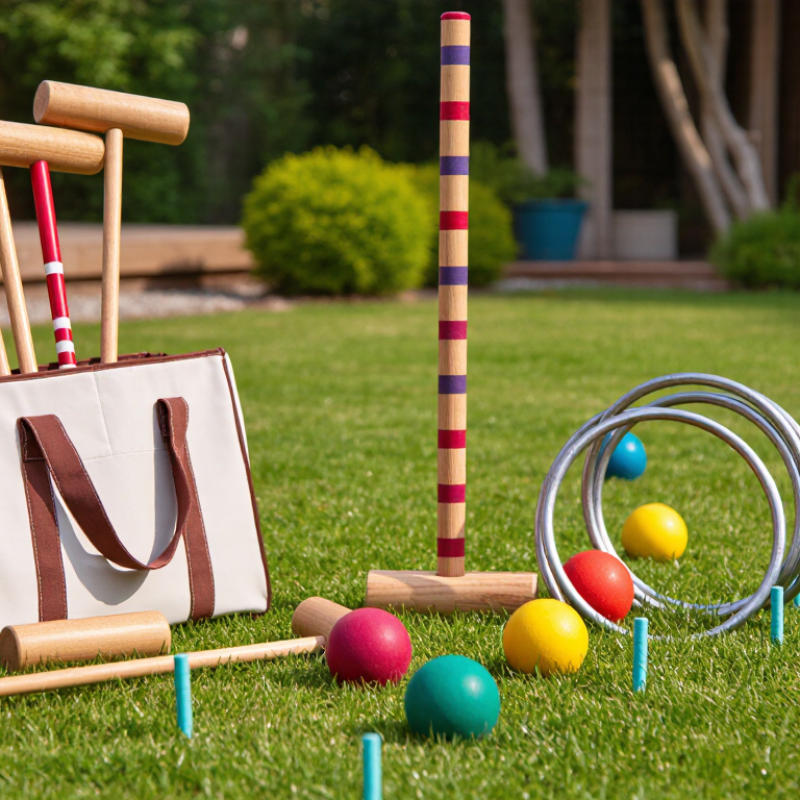
A quality croquet set should make every component easy to identify before play begins. A practical package usually includes mallets, colored balls, wickets, stakes, and boundary markers. Some sets also provide a carrying case, measuring tape, or rule guide. From hands-on setup, I find sturdy wooden mallets offer a better feel than very light plastic ones. However, heavier equipment may be unsuitable for younger players. That trade-off deserves attention.
Player needs vary across markets and households. A compact set may suit two to four casual players in a small garden. Larger sets work better for families, clubs, and group events. Buyers should check handle length, ball diameter, grip comfort, and total package weight. Clear color differences help players follow turns easily. They also reduce confusion in bright sunlight.
Global buyers often consider more than the playing experience. Weather-resistant finishes can help equipment tolerate damp grass, but no coating lasts forever. Storage still matters. Packaging should protect wooden parts from impact and moisture during shipping. Instructions should use simple language, diagrams, and measurements familiar to international customers. Buyers may also review material descriptions, age guidance, replacement-part availability, and customer feedback. I would not trust impressive photographs alone. A set can look refined yet feel unstable on uneven ground. Small details reveal more. Handles can loosen, stakes can bend, and missing boundary clips can interrupt a pleasant afternoon.
| Data Dimension | Typical Croquet Set Information | Relevance for Global Buyers |
|---|---|---|
| Core Playing Equipment | A complete recreational set normally includes four mallets, four balls, six hoops, one center peg, and boundary or court markers. | This configuration supports common four-player games and gives buyers a practical starting point for home gardens, schools, clubs, and hospitality venues. |
| Number of Players | Most four-ball recreational formats are suitable for two to four players. Singles and doubles play are both possible. | A four-player format is useful for family activities and small social groups, while two-player play allows the set to remain versatile when fewer people are available. |
| Croquet Balls | A standard recreational set generally uses four balls in four contrasting colors. Each ball is struck with a mallet and must be durable enough for outdoor use. | Strong color contrast improves visibility on grass and helps players identify their ball quickly, which is especially useful for beginners and mixed-language groups. |
| Hoops and Peg | The common court layout uses six hoops and one center peg. Hoops should be stable, evenly shaped, and suitable for insertion into firm ground. | Buyers should check whether the ground is soft enough for push-in hoops and whether the peg and hoop design can be used safely in the intended outdoor location. |
| Mallet Design | Recreational mallets typically have a wooden or composite shaft, a weighted head, and a comfortable grip. Length and head weight vary by set and user. | Different player heights and ages may require different mallet dimensions. Product listings should state approximate length, head material, and total weight clearly. |
| Playing Surface | Croquet is usually played on a level grass area. A compact recreational layout can be adapted to the available garden or lawn space. | Global buyers should measure the available area, review local ground conditions, and confirm whether the set is intended for casual play rather than tournament-size courts. |
| Game Formats | Common formats include Association Croquet and Golf Croquet. Both commonly use six hoops and four balls, but their rules and turn structures differ. | Clear instructions are important because rule preferences vary by country, club, age group, and level of experience. |
| Materials | Typical materials include hardwood or engineered wood for mallet parts, molded plastic or resin for balls, and coated metal for hoops and pegs. | Material information helps buyers compare durability, weather resistance, weight, maintenance needs, and expected suitability for repeated outdoor use. |
| Portability | Many recreational sets are supplied with a carry bag, storage case, or compact container for the mallets, balls, hoops, and peg. | A portable design can reduce storage requirements and make the set more practical for parks, holidays, community events, and temporary outdoor venues. |
| Storage and Maintenance | Equipment should be cleaned after use, dried before storage, and kept in a dry place. Wooden components benefit from protection against prolonged moisture. | Maintenance guidance helps preserve appearance and function in humid, rainy, coastal, or highly variable climates. |
| Safety Considerations | Players should keep a safe distance from the striking area, inspect mallet heads and handles, and use the set on a clear surface away from fragile objects. | Safety instructions should be provided in accessible language for families, schools, hotels, and community organizations serving mixed-age users. |
| Instruction Requirements | A useful instruction guide should explain equipment setup, hoop placement, ball sequence, scoring, turn order, and basic winning conditions. | Multilingual or diagram-based instructions can improve usability across international markets and reduce confusion for first-time players. |
| Packaging Information | Retail packaging should show the complete component list, packed dimensions, gross weight, recommended age range, and intended use. | Accurate package details help with international freight planning, warehouse storage, delivery-cost estimates, and product compliance reviews. |
| Age Suitability | Age recommendations depend on mallet weight, shaft length, ball hardness, and supervision requirements. Young children should play with adult guidance. | Buyers should select equipment according to user height, coordination, and supervision level rather than relying on age alone. |
| Best Use Cases | Typical uses include family recreation, garden entertainment, school activities, holiday parks, hotels, community events, and beginner practice. | The broad range of uses makes a well-specified recreational set suitable for both household buyers and organizations purchasing for shared use. |
| Selection Priorities | Key comparison points are component completeness, material quality, stability, portability, instruction clarity, storage method, and replacement-part availability. | Evaluating these factors helps international buyers balance price, expected service life, shipping practicality, and local customer expectations. |
Note: Specifications for recreational croquet sets can vary by manufacturer and intended playing level. Buyers should verify the exact component count, dimensions, materials, packed weight, and local import requirements before purchase.
A typical set includes mallets, colored balls, wickets, stakes, and boundary markers. Some packages add carrying cases or rule guides.
A compact set usually suits two to four casual players. It works well in a small garden. Space still matters.
Sturdy wooden mallets often provide better control and feedback. Very light plastic mallets may suit younger players. Heavier equipment can feel tiring.
Check handle length, ball diameter, grip comfort, hoop width, and total package weight. Also inspect the stake and corner markers.
A full court measures about 35 by 28 yards. That requires a generous lawn. A smaller garden needs a reduced layout.
No. It can keep the hoop order and scoring method, but the playing area changes. This compromise is practical, not exact.
They suit casual garden games, younger players, and easier transport. They are smaller than common international tournament balls. The equipment is not equivalent.
A ball near 453 grams can feel stable on short grass. Uneven weight or balance makes distance control frustrating. Printed numbers are not enough.
An opening near 82.1 millimeters leaves about 0.8 millimeters per side. Narrow clearance rewards accuracy. Wider hoops feel easier.
Read material details, measurements, age guidance, and replacement-part information. Inspect customer feedback carefully. Attractive photographs can mislead. Handles loosen. Stakes bend. Missing clips interrupt play.
An Argos Croquet Set can be a practical choice for global buyers seeking a complete and adaptable lawn game package. This guide explains the typical components, suitable player numbers, and the importance of matching equipment with court requirements. It also reviews how set specifications compare with a recognized 35×28-yard court, helping buyers determine whether the set is appropriate for recreational or more structured play. Key equipment benchmarks include 80.5-mm ball diameter, approximately 453-g ball weight, and sufficient hoop clearance for consistent gameplay.
For international purchasing, product value extends beyond the playing field. Buyers should assess protective packaging, accurate HS classification, VAT responsibilities, and climate-resistant materials for safer transportation and storage. A balanced evaluation should also consider cost per player, expected durability, warranty coverage, and access to replacement parts. By combining performance standards, export readiness, and long-term serviceability, an Argos Croquet Set can offer dependable value for households, clubs, schools, and outdoor activity providers in different markets.
